In 2025, trust has become currency. Every growing tech company faces the same question from customers and investors alike: “Are you SOC 2 compliant?”
Rather than treating compliance as a hurdle, high-growth SaaS businesses are now using it as a competitive advantage. Modern SOC 2 platforms automate repetitive work, connect with your tools, and prove your security maturity in weeks instead of months, all while helping you close deals faster.
We compared the leading compliance platforms shaping this new “trust economy.” From full-service solutions with built-in advisors to lightweight automation for startups, these are the top SOC 2 platforms helping companies scale securely and confidently in 2025.
How SOC 2 compliance software works
SOC 2 compliance software automates the heavy lifting of achieving and maintaining SOC 2 compliance. Instead of tracking spreadsheets and screenshots, it connects to your existing systems, such as AWS, Google Workspace, GitHub, and Okta, to collect and monitor evidence automatically.
These platforms continuously check your controls against SOC 2’s Trust Services Criteria and flag issues in real time, such as outdated policies or access risks. Most also include policy templates, audit tracking, and integrations with third-party assessors.
The result is faster audits, fewer manual tasks, and continuous visibility into your compliance posture, helping you prove trust to customers with far less effort.
10 Leading SOC 2 Compliance Platforms
Below are ten of the most trusted SOC 2 compliance platforms in 2025. Each was evaluated for automation depth, usability, support quality, and scalability to help you find the right fit for your SaaS business.
1. Scytale – Best overall
Cost: Custom pricing based on company size and frameworks
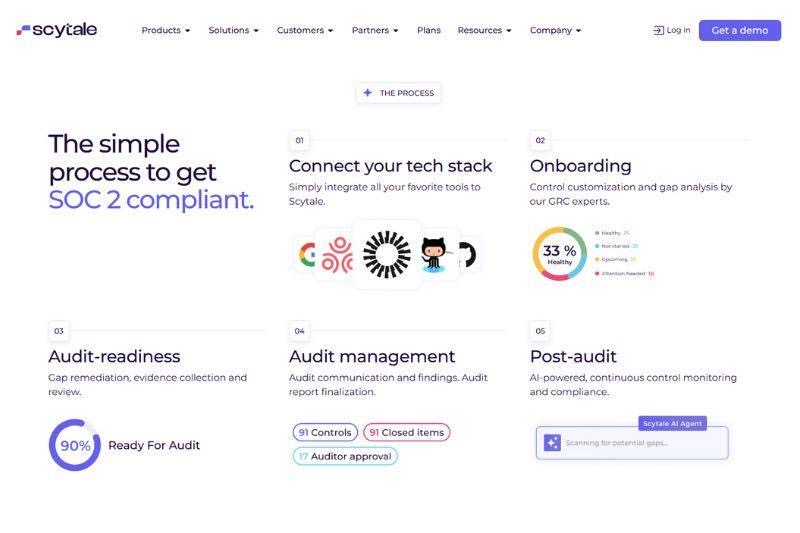
Standout features: Recognized as a leading SOC 2 platform with a full suite of AI-powered automation capabilities. Includes automated evidence collection, continuous control monitoring, user access reviews, vendor risk management, multi-framework cross-mapping, customizable policy templates, and more. Comes with a user-friendly interface and dedicated GRC experts who guide you through SOC 2 before and after the audit.
Pros
- Dedicated compliance experts guide every engagement
- Simple, guided workflow from setup to audit
- Transparent, all-inclusive pricing
Cons
- Pricing available only by quote
Who’s this for?
Scytale is built for SaaS companies of all sizes – from fast-growing startups to established enterprises – that want an end-to-end compliance partner that scales with your business rather than another DIY tool. Its blend of AI-powered automation, hands-on advisory, and a unique, next-gen AI GRC agent, Scy, makes it one of the most complete SOC 2 solutions available.
Website: https://scytale.ai/
2. Sprinto: Best for startups
Cost: Custom pricing based on company size
Standout features: Guided onboarding, pre-built templates, continuous monitoring, automatic alerts, and remediation tracking.
Pros
- Designed specifically for small and early-stage teams
- Fast setup with clear task ownership
- Helpful and responsive customer success team
Cons
- Fewer integrations than larger competitors
- Basic reporting features
Who’s this for?
Sprinto is perfect for startups that need to achieve SOC 2 compliance quickly. The system’s pre-configured controls and guided workflows make the process straightforward for teams without prior experience.
3. Thoropass: Best for integrated audit experience
Cost: Custom pricing
Standout features: Formerly known as Laika, Thoropass integrates compliance software directly with licensed auditors. Includes audit readiness tracking, control mapping, and built-in policy management.
Pros
- Built-in access to auditors within the same platform
- Strong collaboration tools for evidence review
- Excellent collaboration features
Cons
- Less customizable for complex enterprise workflows
- Pricing not publicly listed
Who’s this for?
Thoropass is ideal for small and mid-sized businesses that want a single vendor for both software and auditing. It eliminates the need to coordinate between multiple third parties.
4. Vanta: Best for large teams and deep integrations
Cost: From approximately $10,000 per year
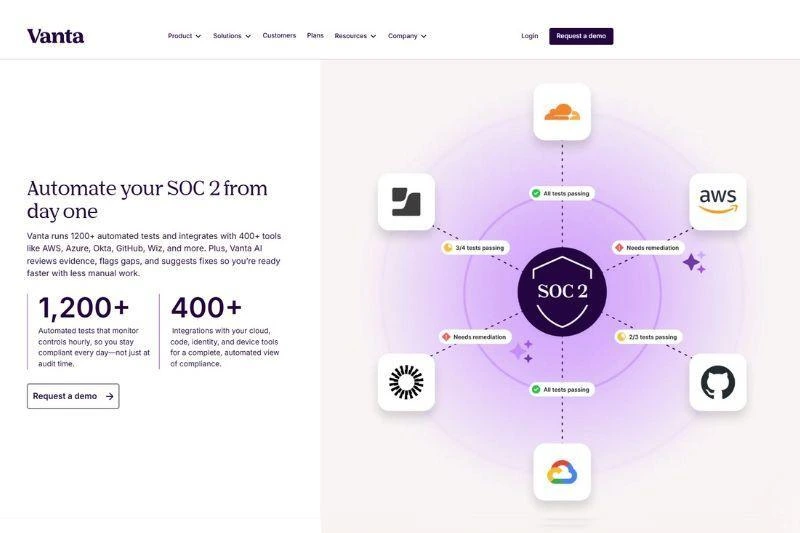
Standout features: 250+ integrations, continuous control monitoring, automated evidence collection, and an extensive partner network of auditors and pen-testers.
Pros
- Deep integration coverage across major SaaS tools
- Real-time control tracking and reporting
- Recognized and trusted by auditors
Cons
- Advisory services sold separately
- Pricing increases with scale and frameworks
Who’s this for?
Vanta is a strong choice for established companies managing large compliance environments. Its automation depth allows teams to maintain readiness without heavy manual intervention.
5. Secureframe: Best for multi-framework coverage
Cost: From about $8,000 per year
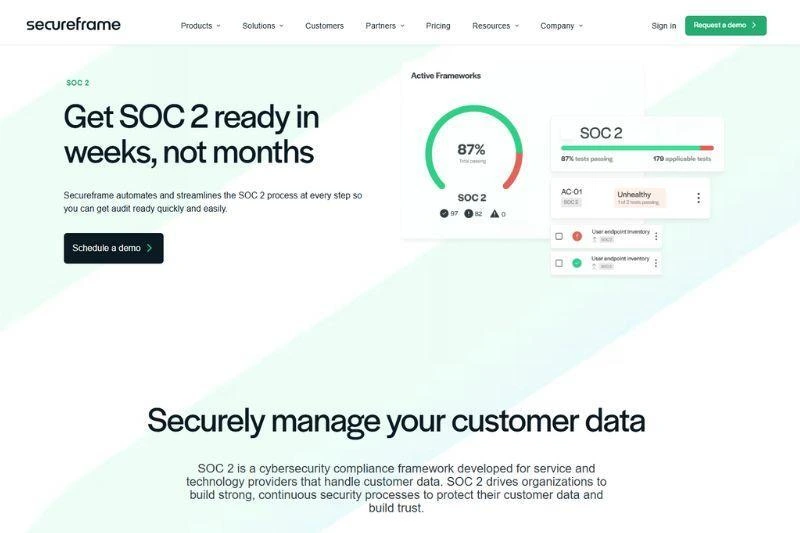
Standout features: Supports SOC 2, ISO 27001, HIPAA, PCI DSS, and more. Real-time alerts for failed controls. Cross-framework mapping and evidence reuse.
Pros
- Clear, user-friendly dashboards
- Multi-framework scalability
Helpful templates and document storage
Cons
- Limited customization for enterprise programs
- Add-on costs may increase pricing
Who’s this for?
Secureframe is designed for companies that plan to expand their compliance program over time. It allows organizations to start with SOC 2 and layer on additional frameworks without switching tools.
6. Astra Security: Best for penetration testing and vulnerability management
Cost: From $1,200 per year for vulnerability assessments
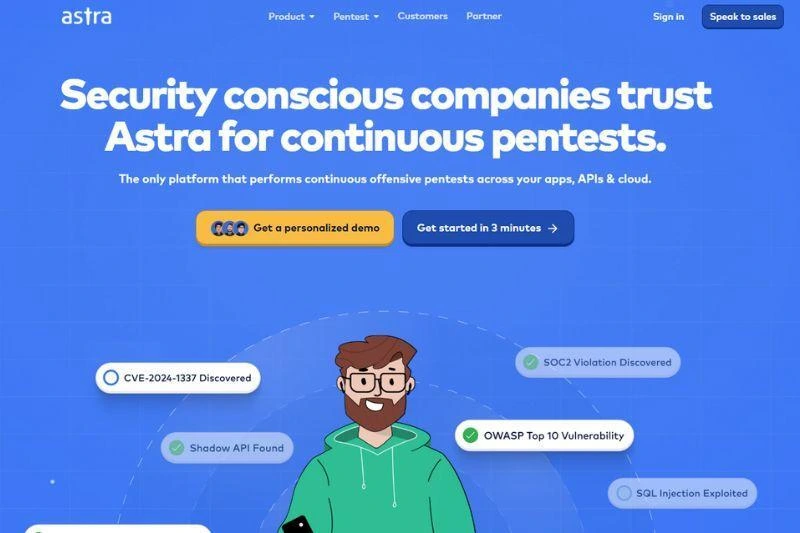
Standout features: Automated and manual penetration testing, continuous vulnerability scanning, compliance mapping for SOC 2 and ISO 27001.
Availability: Web
Pros
- Strong technical testing capabilities
- Continuous scanning with detailed remediation advice
- Simple onboarding
Cons
- Primarily a security testing platform, not full compliance
- Limited framework management tools
Who’s this for?
Astra Security is ideal for startups and SaaS companies that already use a compliance platform but need stronger technical validation. It pairs well with tools like Scytale or Drata to enhance overall security posture.
7. Drata: Best for automation and scalability
Cost: From approximately $6,000 per year
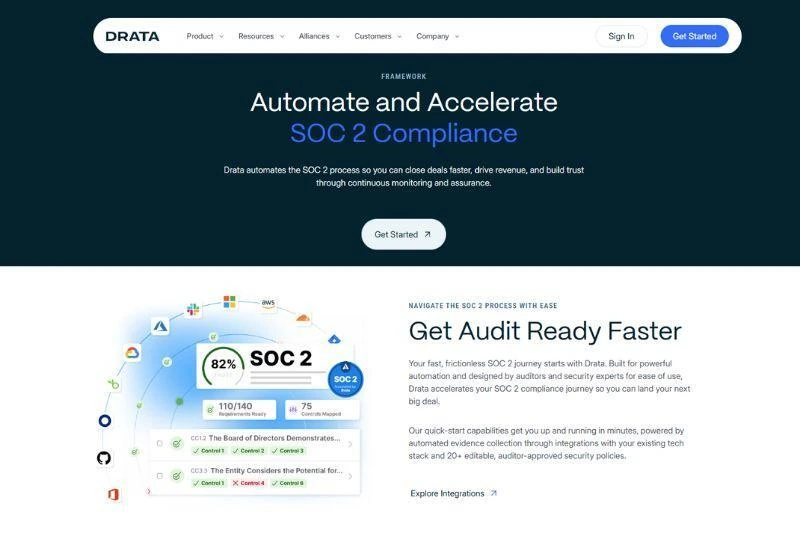
Standout features: Over 200 integrations, continuous monitoring, real-time evidence collection, risk register, policy management, and automated reminders.
Pros
- Streamlined onboarding and user-friendly interface
- Reliable alerts for control gaps and failed tests
- Extensive integration ecosystem
Cons
- Limited custom advisory support
- Some advanced reporting is locked behind higher tiers
Who’s this for?
Drata suits fast-growing SaaS companies that need automation at scale. It keeps teams audit-ready year-round without adding administrative overhead.
8. LogicGate: Best for compliance workflow flexibility
Cost: Custom pricing
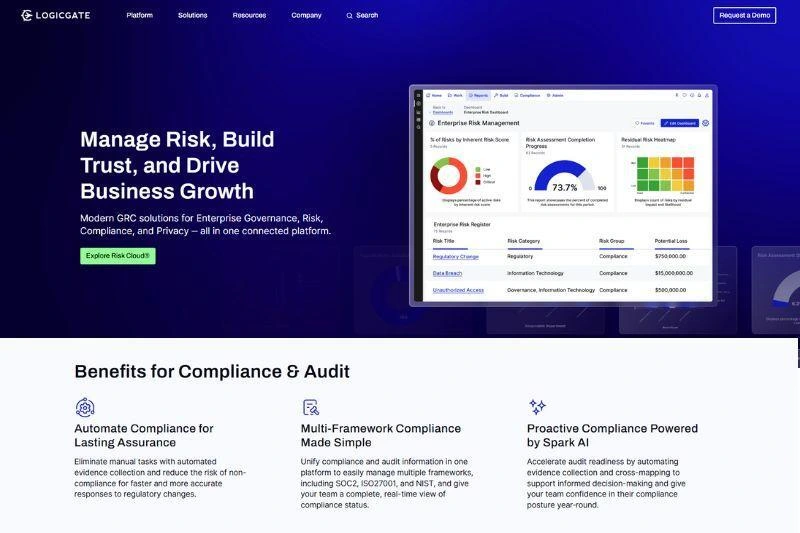
Standout features: Highly configurable GRC workflows, risk management dashboards, and custom control libraries; integrates with Jira, Slack, and ServiceNow.
Pros
- Deep workflow customization
- Scalable to complex governance and risk programs
- Robust reporting capabilities
Cons
- Requires setup expertise to unlock full potential
- Less plug-and-play for small teams
Who’s this for?
LogicGate is ideal for enterprises or mature startups needing customizable GRC workflows that extend beyond standard SOC 2 automation.
9. Scrut Automation: Best for unified compliance automation
Cost: Custom pricing
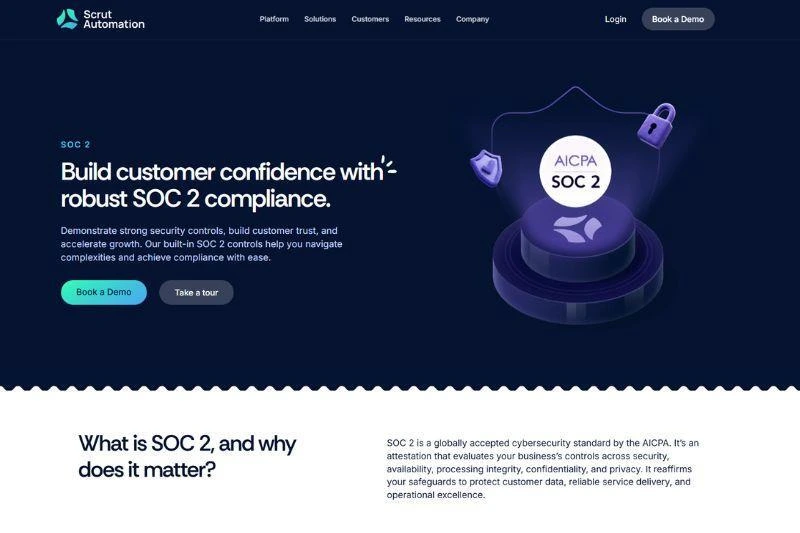
Standout features: Automation for SOC 2, ISO 27001, GDPR, and HIPAA; continuous monitoring; vendor and risk management modules; built-in audit collaboration.
Pros
- Comprehensive multi-framework coverage
- Real-time monitoring across multiple systems
- Built-in risk and vendor modules
Cons
- Smaller partner ecosystem than legacy vendors
- Occasional complexity during setup
Who’s this for?
Scrut Automation is a good fit for tech companies looking to manage multiple compliance programs in a single, modern, integrated platform.
10. Strike Graph: Best for fast SOC 2 readiness and auditor workflows
Cost: Custom pricing
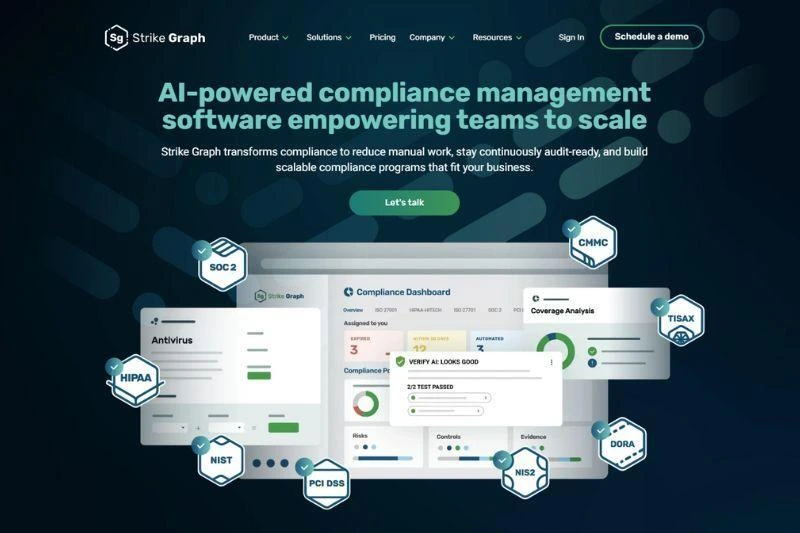
Standout features: Pre-built control templates, step-by-step readiness tracker, and built-in auditor collaboration features.
Pros
- Clear, guided SOC 2 readiness process
- Built-in tools for sharing evidence with auditors
- Easy progress tracking
Cons
- Fewer integrations than large competitors
- Limited automation beyond the SOC 2 scope
Who’s this for?
Strike Graph is designed for smaller organizations that need structure and speed. It helps first-time SOC 2 users organize their evidence and collaborate directly with auditors inside the platform.
Choosing the right SOC 2 platform for your business
Finding the right SOC 2 platform comes down to how your company operates and where you are in your compliance journey. A small startup just beginning its first audit will have very different needs from an established SaaS company expanding into multiple frameworks.
If your team is new to compliance, look for a platform that combines automation with real human guidance. A solution like Scytale or Sprinto can simplify the process by providing templates, onboarding support, and expert advisory alongside automated evidence collection. These tools remove guesswork and help smaller teams stay focused on building their product rather than learning audit language.
For growing companies, scalability becomes the deciding factor. Platforms that integrate with hundreds of systems to automate control monitoring and ensure continuous audit readiness are recommended. Their strength lies in keeping large, distributed teams compliant without constant oversight.
Enterprises or organizations managing several frameworks should prioritize flexibility and depth. Tools like LogicGate and AuditBoard offer customizable workflows, advanced reporting, and built-in risk management that align with broader GRC strategies.
Ultimately, the best platform is the one that fits naturally into your workflow. Before committing, explore demos and confirm that the tool integrates with your existing tech stack. A strong SOC 2 platform should reduce friction, not add to it—and give you confidence that compliance is always under control.
FAQs about SOC 2 compliance
What is SOC 2 compliance software?
SOC 2 compliance software automates evidence collection, control monitoring, user access reviews, vendor risk management, multi-framework cross-mapping, and more so that organizations can meet industry security standards efficiently.
Do I need software to achieve SOC 2 certification?
While manual processes are possible, SOC 2 compliance software reduces risk and saves time by handling evidence tracking, continuous control monitoring, and reporting automatically.
How much does SOC 2 compliance software cost?
Most tools range from $6,000 to $12,000 per year, depending on company size, frameworks, and included support. Enterprise GRC platforms may cost more.
Which tool is best for small businesses?
Scytale and Tugboat Logic are strong choices for small or mid-sized businesses seeking cost-effectiveness and guided SOC 2 audit readiness and compliance.
Read and learn about more useful digital tools on SaaS Space Blog.

- Choosing the Right IT Service Provider South FL for a SaaS-Driven Business (Without Getting Locked Into the Wrong MSP) - January 30, 2026
- Best AI-Powered Domain Name Generators for Startups (2026) - January 29, 2026
- 8 Best Agentic Workflow Tools for Small Businesses Ready to Scale with AI - December 9, 2025