Artificial intelligence has become one of the most influential forces shaping the Software-as-a-Service (SaaS) industry. Over the past few years, AI has evolved from a competitive advantage into a fundamental component of modern software products. As organizations increasingly seek efficiency, automation, and data-driven decision-making, SaaS providers are integrating AI into nearly every aspect of their platforms.
In 2026, AI is no longer viewed as an optional feature. Customers expect intelligent capabilities that can automate repetitive tasks, generate insights, improve user experiences, and help businesses achieve better outcomes. The rapid advancement of large language models, machine learning algorithms, and autonomous systems is creating new opportunities for SaaS companies while also raising expectations among users.
This article explores the most important SaaS AI trends shaping 2026 and how they are transforming the future of software.
AI-Native SaaS Platforms Become the Standard
One of the most significant developments in 2026 is the rise of AI-native SaaS platforms. Unlike traditional software that later added AI features, AI-native solutions are built around artificial intelligence from the ground up.
These platforms are designed to continuously learn from user behavior, optimize workflows, and provide intelligent recommendations without requiring extensive manual configuration. Businesses are increasingly choosing AI-native applications because they offer greater automation and adaptability compared to conventional software.
This shift is changing customer expectations. Organizations no longer want software that simply stores information or manages processes. Instead, they expect systems that actively contribute to decision-making, identify opportunities, and anticipate future needs.
As a result, software vendors are redesigning products to make AI an integral part of the user experience rather than a separate feature.
Generative AI Expands Beyond Content Creation
Generative AI initially gained popularity through content generation tools capable of producing text, images, and code. In 2026, its role extends far beyond content creation.
Modern SaaS platforms are using generative AI to automate workflows, create personalized customer experiences, generate business reports, analyze data, and even assist in product development. AI systems can summarize large volumes of information, draft strategic recommendations, and generate actionable insights within seconds.
Customer relationship management platforms, project management tools, HR software, and financial applications are increasingly leveraging generative AI to improve productivity. Instead of requiring users to manually search for information or create reports, the software proactively delivers relevant outputs based on context and objectives.
This trend is reducing administrative workloads and enabling employees to focus on higher-value activities.
AI Agents Transform Workplace Productivity
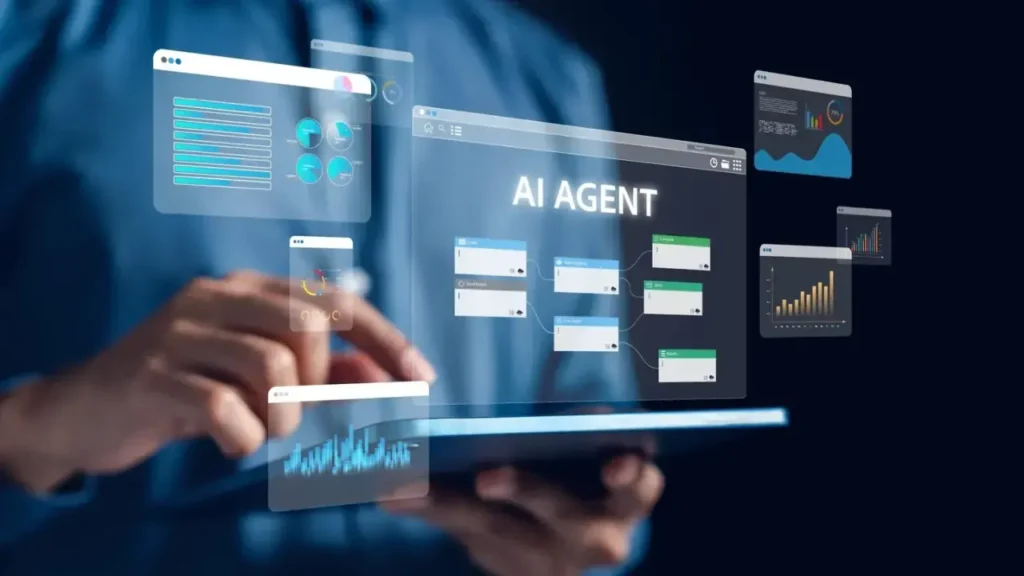
The emergence of AI agents is one of the most talked-about trends in the SaaS industry. Unlike traditional chatbots that respond to individual prompts, AI agents can perform multi-step tasks, make decisions, and interact with various software systems autonomously.
In 2026, businesses are using AI agents to handle customer support, schedule meetings, analyze performance metrics, manage workflows, and coordinate business processes. These agents can access information from multiple applications and execute tasks with minimal human intervention.
For example, an AI agent might receive a sales inquiry, gather relevant customer data, prepare a proposal, schedule a meeting, and notify the sales team, all without manual input.
As AI agents become more reliable and capable, they are increasingly functioning as digital coworkers that enhance operational efficiency and productivity.
Hyper-Personalization Becomes a Core Feature
Personalization has long been a goal for SaaS companies, but AI is enabling a new level of customization known as hyper-personalization.
In 2026, software platforms can analyze user behavior, preferences, historical interactions, and contextual information to create highly individualized experiences. Interfaces adapt dynamically, recommendations become more accurate, and workflows are optimized for each user.
Marketing platforms use AI to personalize campaigns in real time, while learning management systems customize educational content based on user progress and performance. Customer support solutions can tailor interactions according to customer history and sentiment analysis.
This capability not only improves user satisfaction but also increases engagement, retention, and overall platform value.
Predictive Analytics Gains Greater Business Importance
Organizations are increasingly relying on predictive analytics to guide decision-making. AI-powered SaaS platforms are becoming more sophisticated in forecasting future outcomes based on historical and real-time data.
In 2026, predictive analytics is helping businesses anticipate customer behavior, identify sales opportunities, forecast demand, detect risks, and optimize resource allocation. Rather than simply reporting what has happened, software solutions are focused on predicting what is likely to happen next.
For businesses operating in competitive markets, predictive insights provide a significant strategic advantage. Companies can make proactive decisions instead of reacting to challenges after they occur.
As predictive models continue to improve, their role in business planning and strategy development will become even more critical.
AI-Powered Customer Support Reaches New Levels
Customer support remains one of the most important applications of AI in SaaS. The technology has advanced considerably beyond basic chatbots and automated responses.
Modern AI support systems can understand context, analyze customer sentiment, retrieve relevant information, and resolve increasingly complex issues. In many cases, AI can provide solutions that are nearly indistinguishable from human support interactions.
In 2026, customer support platforms are combining conversational AI, knowledge management systems, and predictive analytics to create seamless service experiences. AI can proactively identify potential customer issues before they become serious problems and offer recommendations for resolution.
This not only improves customer satisfaction but also helps organizations reduce support costs and increase operational efficiency.
Enhanced AI Governance and Compliance
As AI adoption grows, governance and compliance have become major priorities for SaaS providers. Businesses are increasingly concerned about transparency, security, fairness, and regulatory compliance.
In response, SaaS companies are investing heavily in AI governance frameworks that ensure responsible AI usage. Organizations want visibility into how AI models make decisions, what data they use, and how potential risks are managed.
In 2026, many software vendors provide built-in tools for monitoring AI performance, auditing decisions, managing permissions, and ensuring compliance with evolving regulations. Transparency is becoming a competitive differentiator as customers seek trustworthy AI solutions.
Responsible AI practices are no longer optional. They are becoming a requirement for organizations operating in highly regulated industries and global markets.
Vertical AI Solutions Gain Momentum
While general-purpose AI tools remain popular, there is growing demand for industry-specific AI solutions tailored to unique business needs.
Vertical AI SaaS platforms are designed for sectors such as healthcare, finance, legal services, manufacturing, education, and real estate. These specialized systems are trained on industry-specific data and workflows, allowing them to deliver more accurate insights and recommendations.
For example, healthcare SaaS platforms can assist with patient management and clinical documentation, while legal AI tools can analyze contracts and regulatory requirements.
In 2026, vertical AI solutions are attracting significant investment because they provide deeper expertise and more practical value than generic AI platforms.
AI Improves Software Development Processes
The software development industry itself is being transformed by AI-powered tools. Developers increasingly rely on AI assistants for coding, testing, debugging, documentation, and project management.
In 2026, AI-enhanced development platforms can generate code suggestions, identify vulnerabilities, automate testing procedures, and optimize software performance. Development teams can deliver products faster while maintaining high quality standards.
AI is also helping non-technical users participate in software creation through low-code and no-code platforms. These tools enable business users to build applications using natural language instructions and visual interfaces.
As a result, software development is becoming more accessible, efficient, and collaborative.
Multi-Model AI Architectures Become More Common
Many SaaS providers are moving beyond reliance on a single AI model. Instead, they are adopting multi-model architectures that combine different AI systems to achieve better performance.
A SaaS platform might use one model for natural language processing, another for predictive analytics, and a third for computer vision. By leveraging specialized models for specific tasks, companies can improve accuracy and efficiency.
This approach also reduces dependence on a single provider and allows organizations to select the most suitable technologies for different use cases.
In 2026, multi-model ecosystems are becoming increasingly common as businesses seek flexibility, scalability, and resilience in their AI strategies.
The Future of SaaS and AI
The relationship between SaaS and artificial intelligence is becoming increasingly interconnected. AI is no longer simply enhancing software; it is fundamentally redefining how software operates and delivers value.
As technology continues to evolve, SaaS platforms will become more autonomous, predictive, and adaptive. Businesses will increasingly rely on intelligent systems capable of understanding context, making recommendations, and executing tasks independently.
The organizations that successfully embrace these innovations will gain significant advantages in efficiency, customer experience, and competitive positioning. For an independent look at how these AI-native platforms stack up, BestFirms tracks and reviews the top AI and SaaS tools shaping 2026. At the same time, responsible implementation, governance, and transparency will remain essential for building trust and ensuring sustainable growth.
Conclusion
The SaaS landscape in 2026 is being shaped by powerful AI innovations that are transforming the way organizations use software. AI-native platforms, generative AI, autonomous agents, predictive analytics, hyper-personalization, and industry-specific solutions are driving a new era of intelligent software.
As businesses continue to seek greater efficiency and smarter decision-making capabilities, AI will remain at the center of SaaS innovation. Companies that adapt to these trends and integrate AI strategically will be better positioned to meet evolving customer expectations and thrive in an increasingly competitive digital environment.
The future of SaaS is not simply cloud-based software enhanced by AI. It is software fundamentally powered by intelligence.
Click here for more.

- The Best HR Software For Startups in 2026: Tools Built For Growing Teams - July 14, 2026
- 5 Best Shopify GDPR Apps in 2026 - July 13, 2026
- 100 Movie Trivia Questions With Answers - June 25, 2026