SaaS businesses obsess over the product, and rightly so. But a recurring pattern shows up as companies grow: the product scales cleanly while the go-to-market motion quietly turns into a mess. The cause is rarely the team or the tools. It is the data underneath them, and almost no one owns it.
Early on, this is invisible. A founder-led sales motion runs on memory and a spreadsheet, and that is enough. Then the company adds a CRM, an email platform, a product-analytics tool, a billing system, a support desk, and a couple of enrichment services. Each one is sensible on its own. Together they create a problem that compounds with every new customer: no single system agrees on who the customer actually is.
Why fragmentation hits SaaS especially hard

SaaS businesses generate customer signals everywhere. A prospect visits the site, starts a trial, fires product events, opens emails, files a support ticket, and maybe books a demo. Each touchpoint lands in a different tool, under a slightly different identifier. The same account shows up as a trial user in one system, a CRM record in another, a billing entity in a third, and a support contact in a fourth, with nothing linking them.
The result is that the company cannot answer basic questions reliably. Which trials are actually engaged. Which accounts are expanding. Who has already been contacted. Revenue reporting drifts, lifecycle emails misfire, and the sales team works leads that are already customers. None of it looks like a data problem. It looks like a conversion problem, a churn problem, or a forecasting problem, all tracing back to the same unowned root.
Manual fixes do not survive growth
The usual response is a periodic cleanup: export the records, dedupe them, reimport a tidier set. It holds until the next wave of signups, then the fragmentation rebuilds itself. Hiring an ops person to maintain it by hand does not scale either, because the systems regenerate disconnected records faster than a person can reconcile them.
Buying another tool tends to make it worse. Each new platform stores its own version of the customer and becomes one more silo, one more place where the truth disagrees with itself.
The fix is a resolved data layer, not more tools
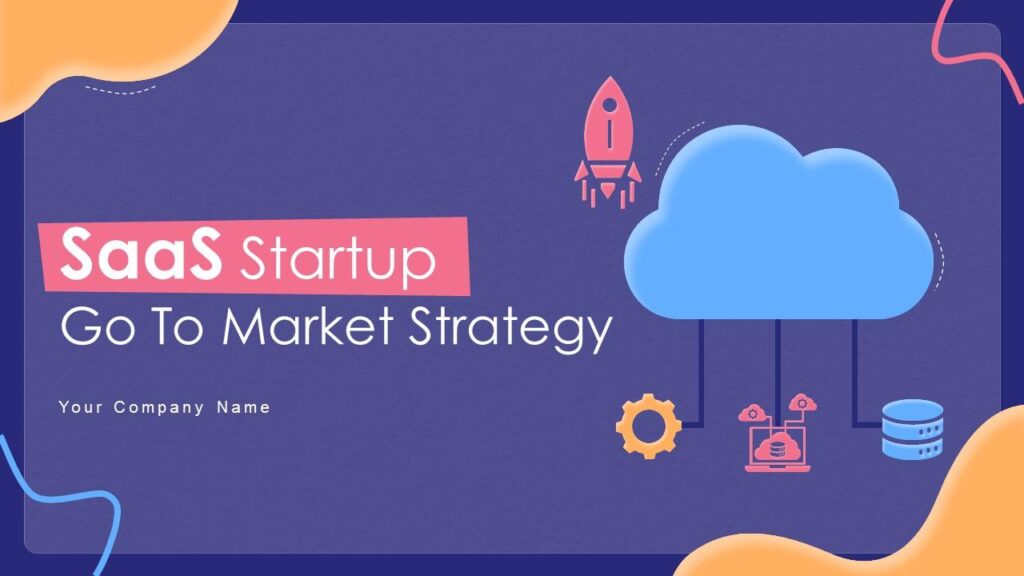
The durable approach is to resolve the records the company already has into a single, current view of each customer and account, and to let every tool reference that. Matching scattered records to the same real entity is called entity resolution, and it is the foundation that makes everything above it trustworthy.
A layer built for this sits beneath the existing stack rather than replacing it, reconciling duplicates and exposing one resolved profile per customer. A modern GTM data platform works on this principle, connecting fragmented records so the same account reads consistently across the product, the CRM, and the rest of the stack. Once that exists, lifecycle automation targets the right users, expansion signals become legible, and the numbers in the board deck stop contradicting the numbers in the CRM.
Why this matters more as SaaS adopts AI
The stakes climb as SaaS businesses wire AI into their go-to-market. An agent that scores accounts, drafts outreach, or triggers a lifecycle play does not pause to question a stale or duplicated record. It acts on whatever it is given, instantly and at scale. Fragmented data does not just produce a few bad emails. It produces them automatically, across the whole base, before anyone notices.
For a SaaS company, the lesson is to treat the data layer as product infrastructure, not a back-office chore. The teams that grow efficiently are not necessarily the ones with the most tools or the biggest sales headcount. They are the ones whose systems actually agree on who their customers are. Get that foundation right early, and every dollar spent on tools, marketing, and AI works harder. Leave it unowned, and it becomes the tax that quietly slows everything down.
Click here fore more.

- 100 Movie Trivia Questions With Answers - June 25, 2026
- The Go-To-Market Problem Most SaaS Businesses Scale Right Past - June 19, 2026
- SaaS AI Trends for 2026 - June 4, 2026