At first, everything looks fine.
Your customer dashboard is up. Billing is flowing. Support tickets are quiet. The engineering team has finally shipped that release everyone was waiting on. From the outside, the business feels stable.
Then something small happens.
A login pattern changes. A privileged account starts behaving strangely. An endpoint begins communicating with an unusual IP address at 2:13 a.m. No one notices right away because, frankly, no one is supposed to be watching that closely at that hour. By the time the issue is discovered, the damage is already spreading across systems, customer trust is shaken, and the internal scramble has begun.
This is exactly why modern SaaS businesses need more than firewalls, passwords, and good intentions. They need visibility. They need process. And they need a plan for what happens when prevention is not enough.
That is why security monitoring and incident response services have become essential for SaaS companies that need around-the-clock visibility and a clear response plan.
For fast-moving software companies, cybersecurity is no longer just an IT concern. It is a product issue, a customer retention issue, a compliance issue, and in many cases, a brand survival issue. The challenge is not simply stopping every threat before it happens. The challenge is detecting suspicious activity early, responding decisively, and minimizing disruption when something slips through.
The New Reality of Risk in SaaS
SaaS companies operate in a high-trust environment. Customers hand over sensitive data, integrate mission-critical workflows, and expect uptime that feels almost invisible. That convenience is part of the business model. It is also what makes the sector attractive to attackers.
Unlike traditional businesses with neatly defined perimeters, SaaS environments are dynamic. Teams work remotely. Infrastructure scales up and down. Third-party integrations multiply. Admin privileges shift as departments grow. The attack surface gets bigger long before most organizations realize it.
A single overlooked vulnerability can create a chain reaction.
Maybe it starts with a compromised employee credential, or it is a misconfigured cloud resource. Maybe an old integration still has access it should not have. What matters is that threats rarely arrive with dramatic warning signs. More often, they surface as subtle behavioral anomalies that only become obvious in hindsight.
That is why reactive security is no longer enough. Waiting for a help desk complaint, a failed audit, or a customer escalation means you are already behind.
What Security Monitoring Really Means

A lot of companies assume monitoring means collecting logs and receiving alerts. That is part of it, but it is far from the whole picture.
Effective security monitoring is the continuous observation of systems, endpoints, identities, network traffic, and user behavior to detect patterns that may indicate compromise, misuse, or imminent risk. It combines tools, analytics, context, and human judgment.
In practice, strong monitoring often includes:
SIEM and Log Analysis
A Security Information and Event Management platform helps centralize logs from across your environment and correlate events that might otherwise look harmless in isolation. One failed login is not always interesting. Fifty failed attempts across multiple accounts followed by a successful login from an unusual geography absolutely is.
Endpoint Visibility
Endpoints remain one of the most common entry points for attacks. Monitoring laptops, servers, virtual machines, and other devices helps teams spot suspicious processes, privilege escalation attempts, ransomware indicators, and unusual outbound connections before those events spiral.
Threat Intelligence
Monitoring becomes more useful when it is informed by known attacker behavior, emerging tactics, malicious IP indicators, and wider patterns across industries. Context matters. An event that looks minor without outside intelligence can become urgent once tied to a larger campaign.
24/7 Oversight
This is where many internal teams struggle. Threats do not respect office hours. If your business runs around the clock, your monitoring posture has to do the same. A delayed response at midnight on Saturday can easily become a Monday-morning crisis.
The strongest providers combine technology with trained analysts who can distinguish signal from noise. That balance matters because too many alerts create fatigue, and too little context creates missed threats.
Why Incident Response Is Just as Important as Detection
Spotting a threat is only the first step. What happens next is what separates a minor disruption from a full-scale incident.
Incident response is the organized process of containing, investigating, and remediating a security event. It is not just a technical exercise. It is a business continuity function.
A mature response capability answers questions like these:
- Who owns the incident the moment it is confirmed?
- How is the threat contained without destroying critical evidence?
- Which stakeholders need to be informed, and when?
- What systems are affected?
- Has customer data been touched?
- What legal, contractual, or compliance obligations are triggered?
- How do we restore operations safely and reduce the chance of recurrence?
Without a structured response plan, even smart teams lose time. They debate, duplicate effort, and make decisions under pressure with incomplete information.
That is expensive.
In SaaS, the cost of confusion is not only operational. It affects customer confidence, renewal conversations, investor confidence, and long-term reputation.
A Practical Example: The Weekend Scenario Nobody Wants
Picture a mid-sized SaaS company serving finance teams. On a Sunday night, an attacker gains access using a compromised admin credential tied to a former contractor account that was never fully deprovisioned.
From there, the attacker begins probing internal systems and accessing data stores with elevated permissions.
If no one is monitoring for anomalous behavior, the attacker may spend hours, or days, moving quietly.
Now picture the same situation in a company with active monitoring and response.
The login is flagged because the behavior does not match the account’s normal pattern. The unusual access path triggers escalation. Analysts review the activity in context, confirm risk, isolate the affected account, and initiate containment. Logs are preserved. Leadership is notified with facts instead of guesswork. The blast radius is assessed early. Recovery begins before the issue becomes customer-facing.
Same threat. Very different outcome.
This is the real value of security operations. Not just prevention, but speed, clarity, and control when the unexpected happens.
What Strong Services Usually Include
Not every provider offers the same depth, and not every company needs the same level of support. But the most effective security monitoring and incident response services tend to include several core capabilities.
Managed Detection and Response
This typically combines 24/7 threat detection, investigation, triage, and coordinated response. It often covers endpoint, identity, cloud, and network signals rather than focusing on only one area.
Security Operations Center Support
A Security Operations Center, or SOC, acts as the command center for monitoring and response. Some providers emphasize in-house analysts, while others rely heavily on automation. The best models do both: automated detection where speed matters and human validation where judgment matters.
Forensic Investigation
Once an incident occurs, forensic capability becomes crucial. Teams need to know what happened, how it happened, what data or systems were affected, and what evidence should be preserved. This is especially important for regulated SaaS sectors like healthcare, finance, and legal tech.
Endpoint Detection and Response
EDR helps track what is happening on devices and servers at a deeper level. It is often one of the fastest ways to identify suspicious activity, isolate compromised assets, and investigate attacker behavior.
Reporting and Continuous Improvement
Monitoring without meaningful reporting is a missed opportunity. Good services do not just surface incidents. They help organizations understand recurring vulnerabilities, response performance, and where to strengthen controls over time.
Why SaaS Leaders Should Care Beyond the Security Team
It is easy to assume this conversation belongs only to CISOs, IT managers, or compliance leads. In reality, the business case reaches much further.
Founders and Executives
Security maturity can shape enterprise sales, due diligence conversations, and customer trust. Buyers want proof that your company can protect their data and respond competently under pressure.
Product and Engineering Leaders
A poorly handled security incident drains roadmap capacity, disrupts releases, and forces teams into reactive fire drills. Better detection and response reduces chaos and creates a more resilient development environment.
Customer Success and Sales Teams
When prospects ask how you monitor threats, handle incidents, or protect customer environments, vague answers create doubt. Clear operational maturity supports revenue, especially in competitive deals.
Compliance Stakeholders
Frameworks and audits increasingly expect more than policies sitting in a shared folder. Evidence of ongoing monitoring, incident handling, documentation, and post-incident review can make compliance far more defensible.
How to Evaluate a Provider Without Getting Lost in Buzzwords
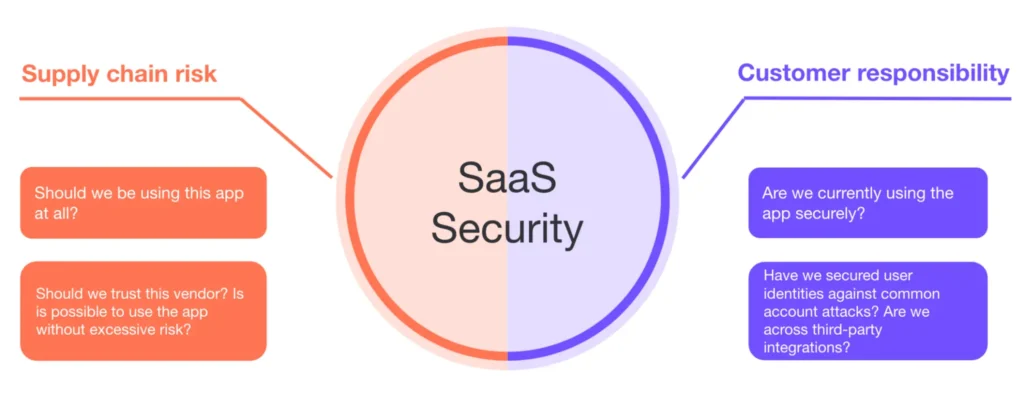
Cybersecurity vendors are fluent in acronyms. That does not always mean they are fluent in outcomes.
When comparing providers, ask practical questions.
Do They Monitor Continuously?
If the answer is not truly 24/7, understand exactly where gaps exist.
What Data Sources Do They Cover?
Look beyond a generic promise of visibility. Ask whether they monitor endpoints, logs, identities, cloud services, user behavior, and third-party risk signals.
How Do They Reduce False Positives?
Alert fatigue is real. Strong providers have clear triage processes and analyst review, not just automated noise.
What Happens During an Actual Incident?
Ask for the response workflow. Who investigates? Who communicates? How fast do they escalate? What actions can they take immediately?
Do They Provide Forensic Support?
After containment, you need answers. Root cause analysis and evidence preservation are not optional when the stakes are high.
Can They Work With Your Existing Environment?
The best services adapt to your current stack instead of forcing a complete reset. Integration matters, especially in complex SaaS ecosystems.
Will Reporting Be Useful to Leadership?
Security reporting should translate technical events into business-relevant insight. If executives cannot understand what happened and what changed afterward, the reporting is not doing its job.
The Competitive Advantage Most Teams Overlook
Here is the part many companies miss: security readiness is not just defensive. It can be a differentiator.
When a SaaS company can confidently explain how its security monitoring and incident response services work in practice, how threats are validated, how incidents are handled, and how lessons learned strengthen future defenses, that maturity sends a powerful signal. It tells prospects, partners, and customers that the business takes resilience seriously.
In crowded categories, trust becomes part of the product.
And trust is easier to earn when your security posture is not based on hope.
The Real Takeaway: Why Proactive Security Monitoring Is Now a Business Essential for SaaS Companies
No organization can guarantee it will never face a security event. The real question is whether the business will discover problems early enough and respond well enough to limit damage.
That is what separates fragile operations from resilient ones.
For SaaS companies, especially those handling customer data, supporting distributed teams, and scaling quickly, the old approach of occasional reviews and best-effort alerting is no longer sufficient. The modern environment demands active monitoring, skilled analysis, structured response, and ongoing refinement—the same foundations that make security monitoring and incident response services so valuable for growing SaaS companies.
The companies that treat this seriously are not being paranoid. They are being practical.
Because in cybersecurity, silence is not always safety. Sometimes it simply means nobody is looking closely enough.
For more articles click here.

- The Best HR Software For Startups in 2026: Tools Built For Growing Teams - July 14, 2026
- 5 Best Shopify GDPR Apps in 2026 - July 13, 2026
- 100 Movie Trivia Questions With Answers - June 25, 2026