Artificial intelligence has completely transformed how research is done in 2026. Instead of spending hours searching through articles, organizing notes, and analyzing data manually, AI research tools can now summarize information, generate insights, organize sources, and even help design research studies. Whether you are a student, marketer, researcher, or product manager, AI research platforms can significantly improve productivity and decision-making.
This article explores the 5 best AI research tools in 2026, starting with Ballpark as a modern AI research platform for product and marketing teams.
1. Ballpark – AI Research Platform for Product and Marketing Teams

Ballpark is an AI-powered modern research platform designed for product and marketing teams to quickly validate ideas, test concepts, and collect meaningful insights from users. It enables companies to run surveys, usability tests, and prototype evaluations in one place, allowing product, design, and marketing teams to make data-driven decisions faster.
The platform simplifies the research process by allowing teams to capture high-quality feedback on product concepts, marketing copy, interfaces, and prototypes using structured tasks and questions. Responses can be collected through text, audio, video, and screen recordings, giving teams deeper insight into how users interact with their products.
Key Features
1. User Research and Feedback Collection
Ballpark enables teams to gather feedback on product ideas, designs, and messaging through surveys, task-based tests, and usability studies. This helps organizations validate assumptions before launching products or campaigns.
2. Prototype and Design Testing
Teams can test wireframes, website designs, and interactive prototypes, especially those created in tools like Figma, to evaluate user experience and identify usability issues early in the development process.
3. Multimedia Feedback (Video, Audio, and Text)
Participants can provide responses via written answers, voice recordings, and video feedback. The platform can also capture webcam and screen recordings so teams can observe real user behavior and reactions.
4. Task-Driven Research Studies
Ballpark allows researchers to create studies with guided tasks and questions that simulate real user interactions. This helps measure how users navigate interfaces, interpret messaging, or complete specific actions.
5. Survey and Questionnaire Tools
The platform supports various survey formats for collecting quantitative and qualitative insights, including NPS, product-market fit, and customer feedback surveys.
6. Template Library for Research
Ballpark provides ready-made templates for usability testing, surveys, and product feedback studies, making it easier for teams to launch research quickly without building everything from scratch.
7. AI-Assisted Study Creation
The platform includes AI tools that help generate research questions and study structures, enabling teams to create and launch research projects more efficiently.
8. Integrations and API Access
Ballpark offers an MCP server and GraphQL API that allows developers to integrate research workflows into existing tools, automate processes, and build custom applications around the platform.
9. Security and Enterprise Features
Enterprise users benefit from advanced security features such as SAML-based Single Sign-On (SSO), role-based permissions, encryption, SOC2, HIPAA and GDPR compliance to protect sensitive research data.
10. AI generated insights
Transform raw research data into a structured narrative that teams can immediately understand and act on. Instead of manually compiling clips, charts, and findings, the system automatically assembles insights, highlights, and recommendations as you review your study results.
2. Perplexity AI – AI Research and Answer Engine
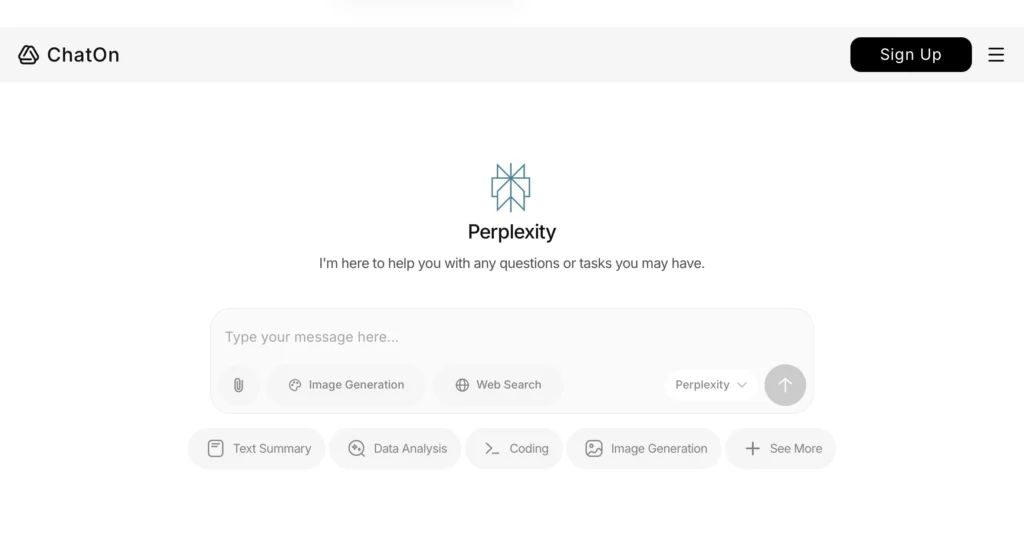
Perplexity AI is one of the most popular AI research tools in 2026. It works like an AI-powered search engine that provides answers with sources, citations, and summaries from across the web.
Instead of opening multiple tabs and reading dozens of articles, Perplexity gathers information, summarizes it, and provides references in seconds. This makes it extremely useful for academic research, market research, and general knowledge exploration.
Key Features
- AI-powered search with cited sources
- Research summaries and explanations
- Follow-up questions and conversational research
- File upload for document analysis
- Academic and web research integration
Perplexity is ideal for students, researchers, journalists, and analysts who need reliable information quickly with sources.
3. Use.ai – AI Research and Content Assistant
Use.ai is another powerful AI research and productivity platform that uses advanced AI models to help users research, write, analyze, and organize information.
This tool is often used for research writing, idea generation, document summaries, and business research. It can help users brainstorm ideas, summarize long reports, analyze documents, and generate structured research content.
Key Features
- AI research assistant
- Document summarization
- Content generation and writing assistance
- Business and market research support
- Idea generation and brainstorming
- Report and article writing
Use.ai is especially helpful for students, writers, marketers, consultants, and business analysts who work with research and content regularly.
4. Claude – AI for Document Research and Analysis
Claude is widely known for its ability to analyze long documents, research papers, PDFs, and reports. In 2026, it is one of the best tools for deep research and document analysis.
Claude can read large files, summarize research papers, extract key points, analyze arguments, and help write research papers or reports. It is particularly useful for academic research and professional research tasks.
Key Features
- Large document analysis
- Research paper summarization
- Writing and editing assistance
- Data analysis and explanation
- Long context understanding
- Report and essay writing support
Claude is ideal for academic research, thesis writing, literature reviews, and professional reports.
5. Elicit – AI Research Assistant for Academic Papers
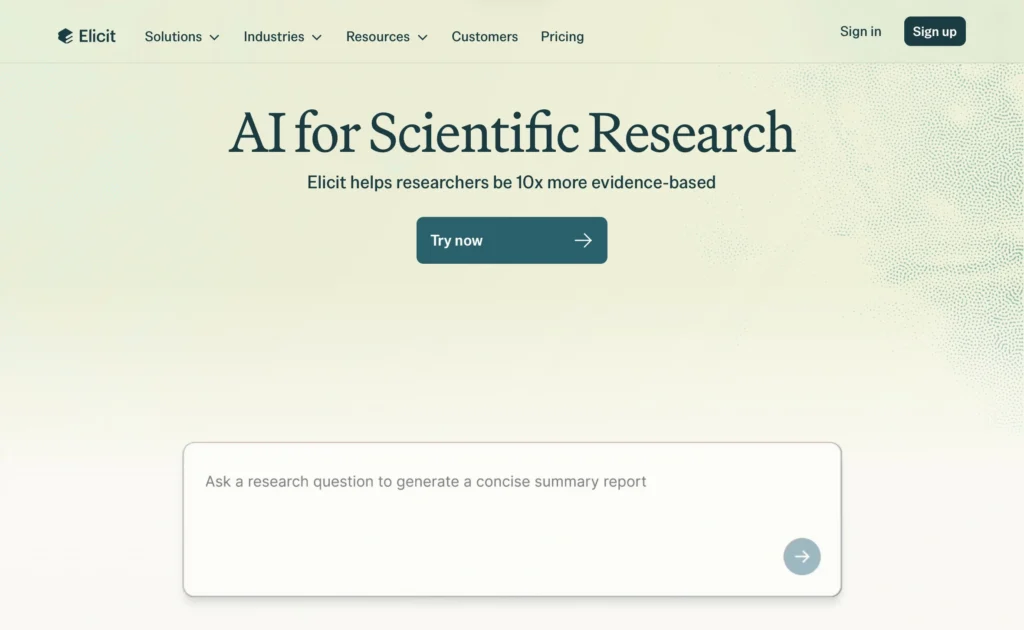
Elicit is an AI research assistant specifically designed for academic research and scientific papers. It helps researchers find papers, summarize studies, extract key findings, and organize literature reviews.
Elicit is particularly useful for students writing research papers, theses, or literature reviews because it can automatically find relevant academic papers and summarize them.
Key Features
- Academic paper search
- Research paper summaries
- Literature review assistance
- Research question generation
- Data extraction from papers
- Evidence comparison between studies
Elicit is best for students, academic researchers, scientists, and thesis writers.
Conclusion
AI research tools in 2026 are not just search tools anymore. They are complete research assistants that can collect data, analyze information, summarize documents, generate insights, and even help design research studies.
The 5 best AI research tools in 2026 are:
- Ballpark – User research and product research platform
- Perplexity AI – AI research search engine
- Use.ai – AI research and content assistant
- Claude – Document analysis and research assistant
- Elicit – Academic research and literature review assistant
Each tool serves a different purpose, and the best choice depends on what type of research you are doing. Product teams may prefer Ballpark, students may prefer Elicit and Claude, and general research users may prefer Perplexity or Use.ai.
As AI continues to evolve, research will become faster, more data-driven, and more accessible, allowing individuals and organizations to make better decisions based on insights rather than assumptions.
Click here for more.

- The Best HR Software For Startups in 2026: Tools Built For Growing Teams - July 14, 2026
- 5 Best Shopify GDPR Apps in 2026 - July 13, 2026
- 100 Movie Trivia Questions With Answers - June 25, 2026