In the competitive world of Software-as-a-Service (SaaS), performance is not a luxury, it’s a growth driver. Slow load times reduce conversions, hurt SEO rankings, increase churn, and create unnecessary infrastructure costs. That’s why implementing effective SaaS caching strategies is one of the most impactful performance optimizations a SaaS company can make.
But not all caching strategies actually improve performance in meaningful ways. Some add complexity without measurable gains. Others create stale data problems or scalability bottlenecks.
This guide explores SaaS caching strategies that truly improve performance, backed by practical implementation insights and keyword-optimized for visibility around terms like SaaS performance optimization, application caching, distributed caching, API caching, and cloud caching architecture.
1. Database Query Caching (The Foundation)
Database operations are often the biggest performance bottleneck in SaaS platforms.
Why It Works
Repeated queries—especially for dashboards, analytics summaries, user profiles, and frequently accessed records—are prime candidates for caching.
Effective Strategy
- Cache expensive SELECT queries.
- Use in-memory stores like Redis for low-latency access.
- Set intelligent TTL (time-to-live) values.
- Implement cache invalidation tied to data updates.
Best Practice
Instead of caching entire tables, cache:
- Aggregated metrics
- Precomputed summaries
- Frequently requested configurations
This improves database caching performance without risking stale business-critical data.
2. Distributed Caching for Scalable SaaS Architecture
As your SaaS scales horizontally, a single-node cache becomes insufficient.
What Is Distributed Caching?
Distributed caching spreads cached data across multiple nodes to support:
- High traffic loads
- Multi-region deployments
- High availability
Tools That Improve Performance
Platforms like Memcached and Redis clusters allow SaaS companies to scale efficiently.
Why It Improves Performance
- Reduces database replication strain
- Supports load-balanced environments
- Maintains fast access even during traffic spikes
For multi-tenant SaaS performance, distributed caching prevents noisy neighbor effects from degrading system-wide speed.
3. API Response Caching (Underrated but Powerful)
Modern SaaS applications rely heavily on internal and external APIs.
Without API caching:
- Every frontend action triggers backend processing.
- External API calls slow down page loads.
- Rate limits become a bottleneck.
Smart API Caching Strategy
- Cache GET responses.
- Implement conditional requests (ETags, Last-Modified headers).
- Use gateway-level caching.
- Cache third-party API results temporarily.
This drastically improves API caching performance, especially for dashboards and reporting tools.
4. Edge Caching & CDN Optimization

For global SaaS products, geography affects speed.
Why Edge Caching Matters
Edge caching stores content closer to users using Content Delivery Networks (CDNs).
One widely used CDN platform is Cloudflare.
What to Cache at the Edge
- Static assets (CSS, JS, images)
- Marketing pages
- Public documentation
- Feature previews
Even partial edge caching significantly improves SaaS page load time optimization.
Performance Impact
- Reduced Time to First Byte (TTFB)
- Faster global response times
- Lower origin server load
5. Server-Side Rendering (SSR) Caching
If your SaaS uses frameworks like React, Vue, or Next.js, SSR caching can reduce render times dramatically.
What Happens Without SSR Caching?
Each request triggers:
- Data fetch
- HTML render
- Client hydration
Caching rendered HTML for short intervals improves:
- Perceived performance
- SEO ranking
- Initial load speed
This is especially effective for:
- Dashboard overviews
- Public SaaS pages
- Frequently accessed tenant views
6. Intelligent Cache Invalidation (The Real Performance Multiplier)
Caching without a strong invalidation strategy causes stale data issues.
There are three major invalidation methods:
1. Time-Based Expiration (TTL)
Simple but less precise.
2. Event-Driven Invalidation
Trigger cache purge when data updates.
3. Tag-Based Invalidation
Associate cache entries with logical tags and purge selectively.
For SaaS platforms handling billing, analytics, or financial data, event-driven invalidation ensures accuracy without sacrificing speed.
This is where most SaaS caching strategies fail—not because of poor caching, but because of poor invalidation logic.
7. Multi-Layer Caching Architecture
The highest-performing SaaS systems use layered caching:
- Browser caching
- CDN caching
- Reverse proxy caching
- Application-level caching
- Database-level caching
Each layer reduces load before it reaches the database.
Why This Works
Instead of relying on one large cache, layered caching:
- Prevents single points of failure
- Improves resilience
- Scales efficiently
This is core to modern cloud caching architecture design.
8. Tenant-Aware Caching for Multi-Tenant SaaS
Multi-tenant SaaS platforms must isolate cache entries per tenant.
Without tenant-aware keys:
- Data leakage risks increase.
- Cache collisions occur.
- Performance becomes unpredictable.
9. Write-Through vs Write-Behind Caching
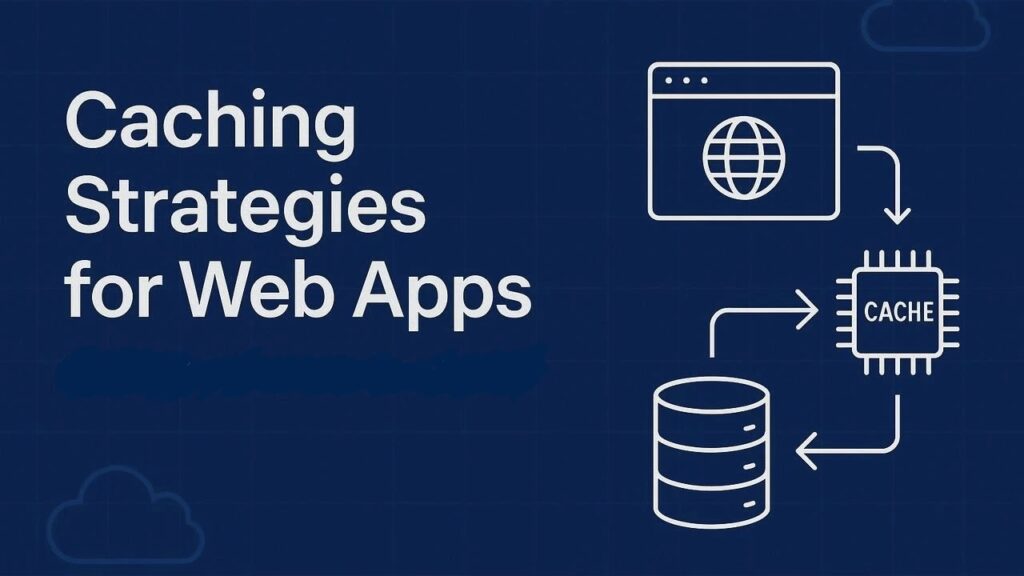
Choosing the right caching pattern directly affects system performance.
Write-Through Caching
Data is written to cache and database simultaneously.
Pros:
- Consistent reads
Cons:
- Slightly slower writes
Write-Behind Caching
Writes go to cache first, database updates asynchronously.
Pros:
- Faster writes
Cons:
- Risk during failures
For high-scale SaaS systems, write-behind can significantly improve throughput—if reliability mechanisms are in place.
10. Measuring Caching Effectiveness
Caching should be data-driven.
Track:
- Cache hit ratio
- Database query reduction
- Average response time
- Server CPU usage
- Time to First Byte (TTFB)
High-performing SaaS applications typically aim for:
- 80%+ cache hit ratio
- 30–60% database load reduction
Without measurement, caching becomes guesswork.
Common SaaS Caching Mistakes
Avoid these pitfalls:
- Over-caching dynamic data
- Ignoring cache invalidation logic
- Storing massive objects unnecessarily
- Not isolating tenant data
- Forgetting monitoring and logging
Caching should simplify architecture—not create hidden technical debt.
The Business Impact of Proper SaaS Caching
Effective SaaS caching strategies improve:
1. Conversion Rates
Faster load times increase trial signups and demo requests.
2. Retention
Users stay longer when dashboards feel instant.
3. Infrastructure Costs
Reduced database load lowers cloud expenses.
4. SEO Rankings
Performance directly impacts search visibility.
5. Scalability
You can handle growth without linear infrastructure expansion.
Final Thoughts: Performance That Scales With Growth
SaaS caching strategies are not about “adding Redis and hoping for the best.” They require:
- Thoughtful architecture
- Tenant-aware design
- Intelligent invalidation
- Multi-layer deployment
- Continuous performance monitoring
When implemented correctly, caching becomes one of the highest-ROI technical investments in SaaS performance optimization.
If your SaaS platform is growing—or planning to scale—now is the time to evaluate whether your caching architecture truly improves performance, or simply masks deeper bottlenecks.
Because in SaaS, speed is not just technical, it’s competitive advantage.
Don’t forget to check out our website.

- 100 Movie Trivia Questions With Answers - June 25, 2026
- The Go-To-Market Problem Most SaaS Businesses Scale Right Past - June 19, 2026
- SaaS AI Trends for 2026 - June 4, 2026